






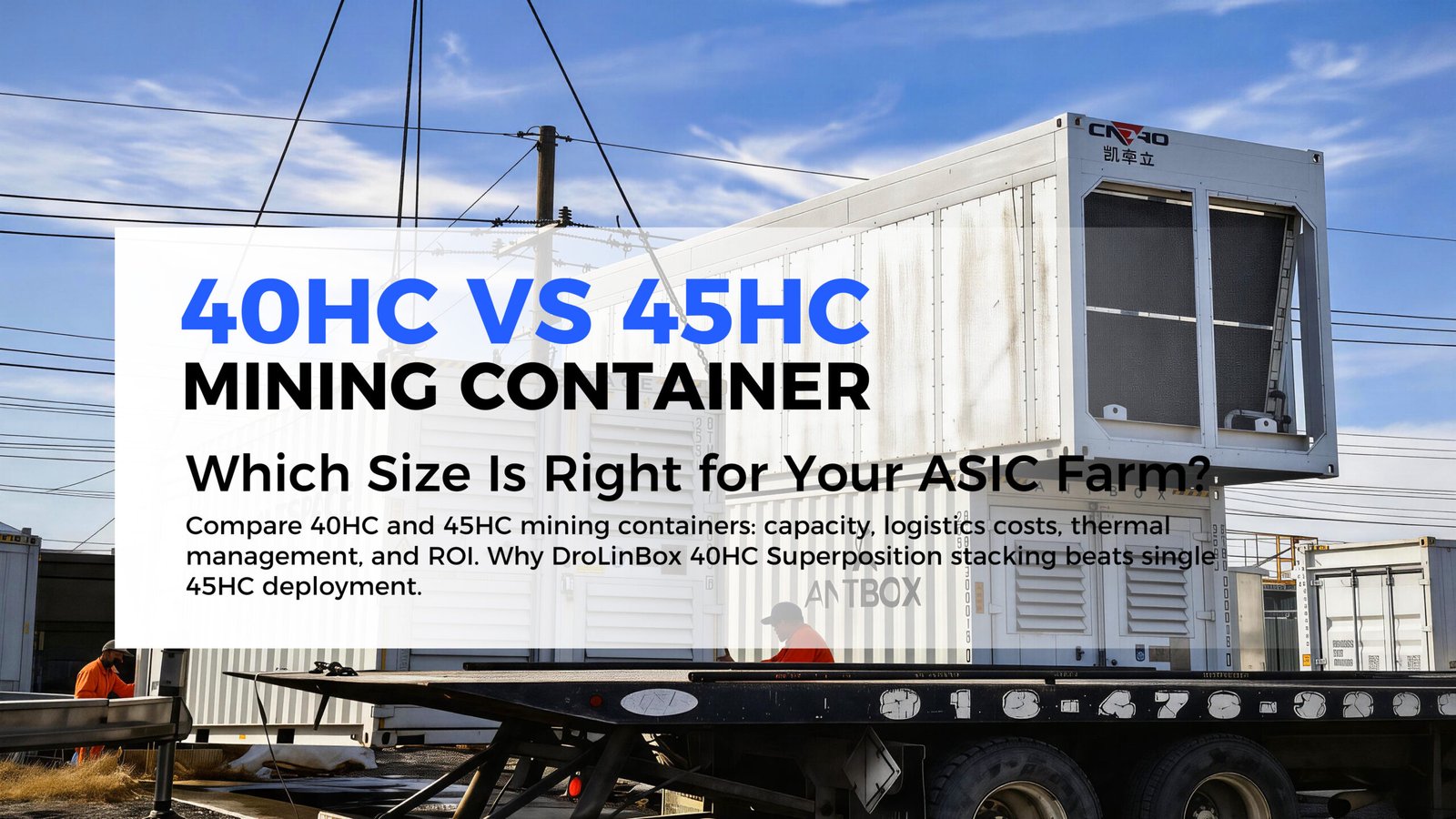

غالبًا ما تكون تكلفة اللوجستيات بمثابة «القاتل الخفي» في البنية التحتية لقطاع التعدين. فعندما تقارن بين حاويات 40HC و45HC، فإنك في الواقع تتخذ قرارًا يتجاوز بكثير مجرد المساحة بالمتر المكعب. فأنت تختار بين أصل معياري عالمي واستثناء إقليمي. ويتكرر هذا الاختيار في كل مرحلة من مراحل النشر: الشحن، والنقل الداخلي، وإعداد الموقع، والنقل النهائي.
تبدو حاوية 45HC جذابة على الورق. فهي توفر حجمًا أكبر بنحو 28% مقارنةً بحاوية 40HC (86 م³ مقابل 67 م³). من الناحية النظرية، تعني هذه المساحة الإضافية إمكانية استيعاب 15–20% من أجهزة التعدين ASIC في حاوية واحدة. والحسابات تبدو واضحة: فلماذا لا نختار الحاوية الأكبر حجمًا؟
لأن الحسابات تتجاهل كل شيء باستثناء الحجم الداخلي. وهنا تظهر الفجوة في عائد الاستثمار.
المواصفات المادية — الحجم مقابل الواقع
حاوية 40HC (معيار ISO)
- الأبعاد الخارجية: 12.19 م طول × 2.44 م عرض × 2.59 م ارتفاع
- الأبعاد الداخلية: 12.02 م × 2.35 م × 2.39 م
- الحجم القابل للاستخدام: ~67 م³
- الوزن (فارغًا): 3,750 كجم
- الحمولة القصوى: 26,730 كجم
حاوية 45HC (غير قياسية)
- الأبعاد الخارجية: 13.72 م طول × 2.44 م عرض × 2.90 م ارتفاع
- الأبعاد الداخلية: ~13.55 م × 2.35 م × 2.70 م
- الحجم القابل للاستخدام: ~86 م³ (أكبر بمقدار ~28%)
- الوزن (فارغًا): حوالي 4,250 كجم
- الحمولة القصوى: حوالي 27,000 كجم (حد مماثل)
وهنا تظهر المشكلة الأولى. فطول عربة 45HC يزيد بمقدار 1.53 متر. ويؤدي هذا الطول إلى فرض قيود على مسارات النقل في أمريكا الشمالية وأوروبا ومنطقة آسيا والمحيط الهادئ. ففي الولايات المتحدة، يبلغ الارتفاع القياسي للسكك الحديدية 2.743 مترًا، بينما يتجاوز ارتفاع عربة 45HC هذا الحد حيث يبلغ 2.90 مترًا. أما في أوروبا، فتمنع قيود عرض الطرق شاحنات 45HC من السير على مسارات معينة دون تصاريح خاصة. ويؤدي هذا الطول الإضافي البالغ 1.53 مترًا إلى سلسلة من التعقيدات اللوجستية.
نصيحة للمحترفين #1 — حساب المساحة الأرضية:
قبل اتخاذ قرار بشراء حاوية 45HC، تأكد من أن موقعك قادر على استيعاب الطول الإضافي. تشغل حاوية 40HC مساحة أرضية قياسية تبلغ 13 م × 2.5 م. أما حاوية 45HC فتصل إلى 14.5 مترًا. في مناطق التعدين المكتظة (آسيا الوسطى والشرق الأوسط)، تبلغ تكلفة كل متر مربع ما بين $500 و$2,000 سنويًا كإيجار أو قيمة للأرض. قد تكلفك الحاوية الأطول ما بين $10K و$20K سنويًا بسبب المساحة الإضافية التي تشغلها في الموقع. وهذا يقلل على الفور من ميزة الكثافة المفترضة.
الفخ اللوجستي الخفي
هنا يصبح القرار جاداً.
اقتصاديات الشحن في حاويات 40HC:
تُعد حاوية 40HC المعيار العالمي. وهي مناسبة لـ:
- معدات المناولة القياسية المطابقة لمعايير ISO (الرافعات، قضبان التوزيع)
- الشحن البحري المجدول (الموانئ المباشرة، الرحلات المنتظمة)
- النقل البري ضمن الحدود القانونية (ارتفاع أقل من 2.6 متر)
- النقل بالسكك الحديدية في أمريكا الشمالية وأوروبا وآسيا
تفاصيل التكاليف للرحلة من شينزين إلى تكساس:
- الشحن البحري: $2,500–$3,200 (السعر القياسي)
- النقل البري بالشاحنات: $1,200–$1,500 (المسار القياسي)
- رسوم المناولة/الميناء: $400–$600
- الإجمالي: $4,100–$5,300
المدة الزمنية للتسليم: 18–22 يومًا بحريًّا + 4–5 أيام براً = 3–4 أسابيع.
45HC اقتصاديات الشحن:
يواجه الطراز 45HC بعض القيود. والخيارات المتاحة هي:
- النقل البحري + النقل بالشاحنات ذات الحمولة الزائدة (مسموح به في معظم المناطق لكنه مكلف)
- الشحن الجوي لعمليات النشر التي تتطلب سرعة في التسليم
- السكك الحديدية + شاحنات مسطحة متخصصة (غير متوفرة على جميع المسارات)
تفاصيل التكاليف للرحلة من شينزين إلى تكساس:
- الشحن البحري: $3,200–$4,500 (رسوم إضافية غير قياسية، علاوة تبلغ حوالي 35%)
- الشاحنات ذات الأبعاد الزائدة: $2,200–$3,500 (تتطلب تصاريح خاصة ومرافقة سيارة إرشادية في بعض الولايات)
- رسوم المناولة/الميناء: $600–$900 (المعدات ذات الأبعاد الكبيرة)
- الإجمالي: $6,000–$8,900
المدة الزمنية للتسليم: 18–22 يومًا عبر البحر + 6–8 أيام عبر البر (مسار أطول) = 4–5 أسابيع.
معادلة التكلفة:
في الشحنة الواحدة، تزيد تكلفة حاوية 45HC عن حاوية 40HC بمقدار $1,900–$3,600. وإذا قمت بنقل 5 حاويات، فسيتراوح ذلك بين $9,500 و$18,000 من التكاليف اللوجستية الإضافية. أما في حالة استخدام 10 حاويات، فستكون التكلفة كما يلي: $20K–$35K رسوم إضافية لمجرد نقل الصناديق.
تتلاشى هذه الميزة إذا استخدمت استراتيجية «التراكب» من DroLinBox: حاويتان من طراز 40HC مكدستان عموديًا. ستحصل على مساحة قابلة للاستخدام تبلغ حوالي 134 م³ (مقابل 86 م³ للحاوية 45HC)، بتكلفة شحن مماثلة لتكلفة وحدتين قياسيتين من طراز 40HC، مع مرونة لوجستية أفضل بكثير.
نصيحة للمحترفين #2 — الاختلافات اللوجستية الإقليمية:
الرسوم الإضافية على شاحنات 45HC ليست موحدة. ففي الشرق الأوسط وبعض مسارات شمال إفريقيا، يمكن أن تصل الرسوم الإضافية على شاحنات 45HC إلى 50% (مع إضافة $5K+ لكل وحدة). أما في جنوب شرق آسيا، حيث تكون لوائح الطرق أكثر صرامة، فإن بعض المسارات ترفض شاحنات 45HC تمامًا، مما يفرض اللجوء إلى تجميع الشحنات أو النقل بالسكك الحديدية — وهما حلان بديلان مكلفان. قبل اختيار 45HC، احصل على عروض أسعار الشحن من ثلاثة مزودين للخط المحدد بين المنشأ والوجهة. هذه الخطوة الواحدة توفر على معظم المشغلين ما بين $5K و$15K لكل وحدة.
حقيقة السعة — هل يمكنك فعلاً الاستفادة من المساحة الإضافية؟
وهنا يكمن الفخ الثاني. تتمتع منصة 45HC بحجم أكبر بمقدار 28%، لكن هل يمكنك فعلاً ملؤها بأجهزة تعدين عاملة؟
الحالة 1: التكوين القياسي لـ 40HC
- كثافة الخوادم: 240 وحدة (حجم 2U، مكدسة في 4 طبقات لكل رف)
- الحمل الحراري: ~1,560 كيلوواط (240 وحدة × 6.5 كيلوواط في المتوسط لكل جهاز Whatsminer)
- متطلبات وحدة CDU: نظام CDU واحد بقدرة 1 ميجاوات
- توزيع الكهرباء: خزانتان بسعة 2000 أمبير
يتناسب هذا تمامًا مع المساحة الداخلية لشاحنة 40HC. ويتم تنظيم تدفق الهواء بشكل جيد. كما أن توزيع مشعب سائل التبريد متوازن.
الحالة 2: التكوين “المُحسَّن” لطراز 45HC
لديك مساحة إضافية تبلغ 28%. وببساطة، قد تفكر في نشر أكثر من 300 جهاز تعدين في وحدة سعة 45HC.
ولكن ها هي الحقيقة في مجال الهندسة الحرارية:
يبلغ طول طراز 45HC 1.53 مترًا أكثر (13.55 م مقابل 12.02 م). ويجب أن ينتقل سائل التبريد من مدخل المشعب إلى أبعد خادم ثم يعود. ويزداد انخفاض الضغط مع زيادة طول المسار. ويجب أن يأخذ تصميم المشعب في الاعتبار ما يلي:
- 25%: مقاومة تدفق أعلى في خطوط العودة
- التقسيم الطبقي الحراري المحتمل (تتشكل مناطق ساخنة وباردة عند أطراف مختلفة من المشعب)
- تكون درجات حرارة مواقع الخادم في الطرف البعيد التي تستقبل سائل التبريد أعلى بمقدار 3–5 درجات مئوية مقارنةً بالمواقع في الطرف القريب
النتيجة: يمكن استيعاب 280–290 جهاز تعدين في وحدة 45HC، وليس 308. وتنخفض الكثافة من 28% نظريًّا إلى 10–15% فعليًّا.
وفي الوقت نفسه، يستخدم نهج «التراكب» الذي تتبعه شركة «DroLinBox» نظامان منفصلان من نوع CDU — وحدة واحدة لكل فئة 40HC. وتدير كل وحدة CDU 240 وحدة بالضبط مع توازن مثالي في المشعب. ويبلغ المجموع 480 وحدة في نفس المساحة الأرضية التي تشغلها وحدة واحدة من فئة 45HC، دون أي تأثير سلبي على الأداء الحراري.
480 عامل منجم مقابل 290 عامل منجم في مساحة مادية مماثلة. هذه ليست ميزة لنموذج 28%. بل هي ميزة لنموذج 66% بفضل البنية الذكية.
نصيحة للمحترفين #3 — المحاكاة الحرارية قبل النشر:
قبل الالتزام باستخدام نظام 45HC مع أكثر من 300 جهاز تعدين، قم بإجراء محاكاة ديناميكيات الموائع الحسابية (CFD) لتصميم نظام التوزيع الخاص بك. يتجاهل معظم المشغلين هذه الخطوة ليكتشفوا عند بدء التشغيل أن الخوادم البعيدة تتعرض لانخفاض في الأداء بسبب ارتفاع درجة حرارة سائل التبريد. تساعد محاكاة $3K على تجنب خسارة هامش تبلغ $50K+ شهريًّا ناتجة عن انخفاض معدل التجزئة. ويأتي نظام CDU من DroLinBox مزودًا بمحاكاة المشعبات مسبقًا — وهي ميزة خفية أخرى للتوحيد القياسي.
تحديات إدارة الحرارة والكهرباء
يطرح طول طراز 45HC تحديات في التوزيع تتجاوز مجرد تدفق سائل التبريد.
توزيع الطاقة في حاوية 40HC:
- خزانتان كهربائيتان بسعة 2000 أمبير موضوعتان بشكل متماثل
- يخدم كل خزانة حوالي 120 من عمال المناجم
- يمتد الكابل من الخزانة إلى الألواح المبردة: بحد أقصى 15 مترًا
- انخفاض الجهد: <2% (مقبول)
- الضغط الحراري على الكابلات: ضئيل للغاية
توزيع الطاقة في طراز 45HC:
- يجب أن تستوعب الخزائن أكثر من 290 عامل منجم
- يمتد مسار الكابل إلى 18–20 مترًا (مواقع نهاية الحاوية)
- انخفاض الجهد: 3–4% (عند الحد الأدنى لهامش الأمان)
- الضغط الحراري على الكابلات: ملحوظ، ويتطلب استخدام أسلاك ذات قطر أكبر (التكلفة +$2K–$5K)
- التخفيف: ثلاث خزانات كهربائية بدلاً من اثنتين (التكلفة +$50K)
إن الطول الإضافي لجهاز 45HC يعني أنك ستحتاج إما إلى بنية تحتية كهربائية ذات سعة أكبر، أو أن تتقبل انخفاض الجهد الذي يؤدي إلى انخفاض معدل التجزئة بمقدار 1–2%. وهذا يلغي الميزة المفترضة المتعلقة بالكثافة.
تتجنب تقنية «40HC Superposition» هذا الأمر تمامًا. فهي تتألف من نظامين كهربائيين منفصلين، كل منهما مُحسَّن لـ 240 وحدة، مما يزيل أي مخاوف بشأن انخفاض الجهد الكهربائي، ويقلل التكلفة الإجمالية للبنية التحتية، حيث يتم استخدام مكونات ذات أحجام قياسية مرتين بدلاً من استخدام مكونات ذات أحجام أكبر من اللازم مرة واحدة.
إطار عمل عائد الاستثمار — المفاضلة بين الكثافة والتكلفة
دعني أضع إطارًا لاتخاذ القرار. عليك الاختيار بين 40HC و40HC Superposition (حاويتان مكدستان فوق بعضهما) و45HC.
الإعداد: نشر 500 جهاز تعدين ASIC على مستوى العالم
خمس حاويات من طراز 40HC (قياسية)
| التكلفة | لكل وحدة | 5 وحدات | المجموع |
| النفقات الرأسمالية الخاصة بالحاويات | $15,000 | — | $75,000 |
| الشحن (حاوية 40 قدمًا عالية السعة قياسية) | $4,500 | — | $22,500 |
| أنظمة CDU | $100,000 | — | $500,000 |
| البنية التحتية الكهربائية | $40,000 | — | $200,000 |
| التحضير للموقع | $30,000 | — | $150,000 |
| المراقبة/الضوابط | $8,000 | — | $40,000 |
| إجمالي النفقات الرأسمالية (500 عامل منجم) | — | — | $987,500 |
| النفقات الرأسمالية لكل عامل منجم | — | — | $1,975.00 |
| المساحة الأرضية | 65 مترًا مربعًا | — | — |
| الحجم القابل للاستخدام/المُعدِّن | 0.134 متر مكعب | — | — |
جهازي 40HC Superposition + جهاز واحد 40HC Standard (480 + 240 = 720 جهاز تعدين)
| التكلفة | لكل وحدة | 3 وحدات | المجموع |
| النفقات الرأسمالية الخاصة بالحاويات | $15,000 | — | $45,000 |
| الشحن (حاوية 40 قدمًا عالية السعة قياسية) | $4,500 | — | $13,500 |
| أنظمة CDU (وحدات المضخة المزدوجة) | $100,000 | — | $300,000 |
| البنية التحتية الكهربائية | $40,000 | — | $120,000 |
| التحضير للموقع | $30,000 | — | $90,000 |
| المراقبة/الضوابط | $8,000 | — | $24,000 |
| إجمالي النفقات الرأسمالية (720 عامل منجم) | — | — | $592,500 |
| النفقات الرأسمالية لكل عامل منجم | — | — | $822.92 |
| المساحة الأرضية | 65 مترًا مربعًا | — | — |
| الحجم القابل للاستخدام/المُعدِّن | 0.093 م³ | — | — |
خمس حاويات من طراز 45HC (500 عامل منجم، بمتوسط 90 عاملاً لكل حاوية)
| التكلفة | لكل وحدة | 5 وحدات | المجموع |
| النفقات الرأسمالية الخاصة بالحاويات | $22,000 | — | $110,000 |
| الشحن (45HC بريميوم) | $7,500 | — | $37,500 |
| أنظمة CDU | $120,000 | — | $600,000 |
| البنية التحتية الكهربائية (ذات السعة الزائدة) | $50,000 | — | $250,000 |
| تجهيز الموقع (مساحة أكبر) | $35,000 | — | $175,000 |
| المراقبة/الضوابط | $10,000 | — | $50,000 |
| إجمالي النفقات الرأسمالية (500 عامل منجم) | — | — | $1,222,500 |
| النفقات الرأسمالية لكل عامل منجم | — | — | $2,445 |
| المساحة الأرضية | 72 مترًا مربعًا | — | — |
| الحجم القابل للاستخدام/المُعدِّن | 0.172 م³ | — | — |
التحليل:
- معيار 40HC: $987,500 (5 حاويات، بإجمالي 100 متر مكعب)
- 40HC سوبربوزيشن: $592,500 لـ 720 جهاز تعدين (نفس المساحة المطلوبة، نفس النفقات الرأسمالية)
- 45HC: $1,222,500 (5 حاويات، بإجمالي 430 متر مكعب)
ميزة التراكب: يمكنك نشر 44% جهاز تعدين إضافي (720 مقابل 500) في نفس المساحة الأرضية وبنفس ميزانية الموقع. أما طراز 45HC فيكلف $235K+ أكثر لنفس العدد البالغ 500 جهاز تعدين، مع خصائص حرارية أسوأ.
نصيحة للمحترفين #4 — أهمية حساب إيجار الأرض:
تتطلب حاوية 45HC مساحة أرضية أكبر. في المواقع المتميزة (الشرق الأوسط، أمريكا الشمالية)، تتراوح تكلفة الأرض بين $5K و$20K لكل 100 م² سنويًّا. وتستهلك خمس حاويات 40HC مساحة 65 م² (مساحة مشتركة). تستهلك خمس حاويات 45HC مساحة 72 م². ويكلف هذا الفارق البالغ 7 م² ما بين $3,500 و$14,000 سنويًا كإيجار. على مدى فترة نشر مدتها 5 سنوات، يبلغ ذلك ما بين $17,500 و$70,000 كتكلفة فرصة بديلة خالصة. أما نهج «التراكب» فيتم فيه التكديس عموديًا، دون استهلاك أي مساحة أرضية إضافية.
شرح ميزة التراكب
ما المقصود بـ«40HC Superposition»؟
حاويتان من طراز 40HC مكدستان عموديًا على مساحة أرضية واحدة. وتشتركان في:
- منصة معدات واحدة (تساوي مساحة أرضية حاوية 40HC واحدة)
- نظامان مستقلان من نوع CDU (تكرار احتياطي بنظام N+1 على مستوى المنشأة)
- نظامان كهربائيان مستقلان (معزولان، مع إجهاد أقل لكل وحدة)
- عملية رفع واحدة باستخدام رافعة واحدة لكلتا الوحدتين
لماذا يتفوق هذا على 45HC:
- السعة: 480 عامل منجم في شاحنتين من طراز 40HC مقابل 290 عامل منجم في شاحنة واحدة من طراز 45HC. الحجم أكبر (134 م³ مقابل 86 م³).
- اللوجستيات: شحنتان قياسيتان من نوع 40HC. لا توجد تصاريح للشحنات ذات الأبعاد الزائدة. تتعامل جميع شركات النقل بالشاحنات في جميع أنحاء العالم مع شحنات 40HC. لا توجد رسوم إضافية على شحنات 45HC.
- التكرار: في حال تعرضت إحدى وحدات 40HC لمشكلة حرارية أو كهربائية، تستمر الوحدة الأخرى في العمل. أما في حالة تعطل وحدة 45HC، فيؤدي ذلك إلى توقف تام عن العمل.
- الطابع المعياري: هل تحتاج إلى 1,000 عامل منجم؟ قم بنشر 5 وحدات «Superposition». هل تحتاج إلى 500؟ قم بنشر 2.5 وحدة (وحدة «Superposition» واحدة + وحدة 40HC قياسية واحدة). أما وحدة 45HC فتفرض عليك اتخاذ قرارات صعبة بشأن قابلية التوسع.
- الصيانة: يمكن صيانة كل حاوية من طراز 40HC بشكل مستقل. أما صيانة الحاويات من طراز 45HC فتتطلب إيقاف تشغيل الحاوية بالكامل.
إطار القرار النهائي
40HC القياسي:
- أنت تقوم بنشر أقل من 300 مُعدِّن
- يعاني موقعك من قيود شديدة على المساحة المتاحة
- تريد أقصى درجات البساطة
- يجب تقليل النفقات الرأسمالية إلى أدنى حد ممكن (حاوية واحدة = أقل تكلفة)
40HC سوبربوزيشن:
- أنت تقوم بنشر ما بين 400 و800 مُعدِّن
- لديك مساحة أرضية كافية (65 مترًا مربعًا كحد أدنى)
- تريد أفضل كثافة في فئتها مقابل كل دولار
- أنت تولي أهمية للتكرار التشغيلي
- أنت تخطط للتوسع في المستقبل (التوسع المعياري)
45HC:
- أنت تقوم بالنشر في مناطق يتعذر فيها توجيه 40HC (وهو أمر نادر)
- يتميز موقعك بمساحة أرض غير محدودة، لكنه يخضع لقيود صارمة على الارتفاع (وهو أمر نادر جدًّا)
- لقد التزمتم بالفعل بإنشاء بنية تحتية كهربائية ضخمة الحجم
بالنسبة لـ 95% من مشغلي المناجم في عام 2026، فإن القرار هو: التراكب يتفوق على كل شيء آخر.
الخلاصة: الحساب دائمًا ما يقول الحقيقة
يبدو الطراز 45HC جذابًا. سعة أكبر تبلغ 28% في صندوق واحد. دون تعقيدات التكديس.
لكن الواقع المالي قاسٍ. تكلفة إضافية تتراوح بين $1,900 و$3,600 لكل وحدة في مجال الخدمات اللوجستية. وتكلفة إضافية تتراوح بين $50K و$250K في البنية التحتية الكهربائية ذات الحجم الضخم. ميزة كثافة فعلية أقل (10–$15% بدلاً من 28%) بسبب الطبقات الحرارية. استهلاك مساحة أكبر من الأرض لكل جهاز تعدين يتم نشره.
أما طراز 40HC Superposition، فيقدم ما يلي:
- ميزة الكثافة في طراز 66% مقارنةً بحاوية 40HC مفردة
- 48%: تكلفة أقل لكل عامل تعدين مقارنةً بـ 45HC
- بدون أي تكلفة إضافية للخدمات اللوجستية
- التكرار على مستوى المنشأة
- توازن حراري وكهربائي مثالي
- التوحيد القياسي العالمي
في مجال البنية التحتية للتعدين، التوحيد القياسي ليس أمراً مملّاً. إنه مربح. وهو موثوق. كما أنه قابل للتوسع.
ليس بالضرورة أن تكون الحاوية الأكبر هي الخيار الأفضل.