






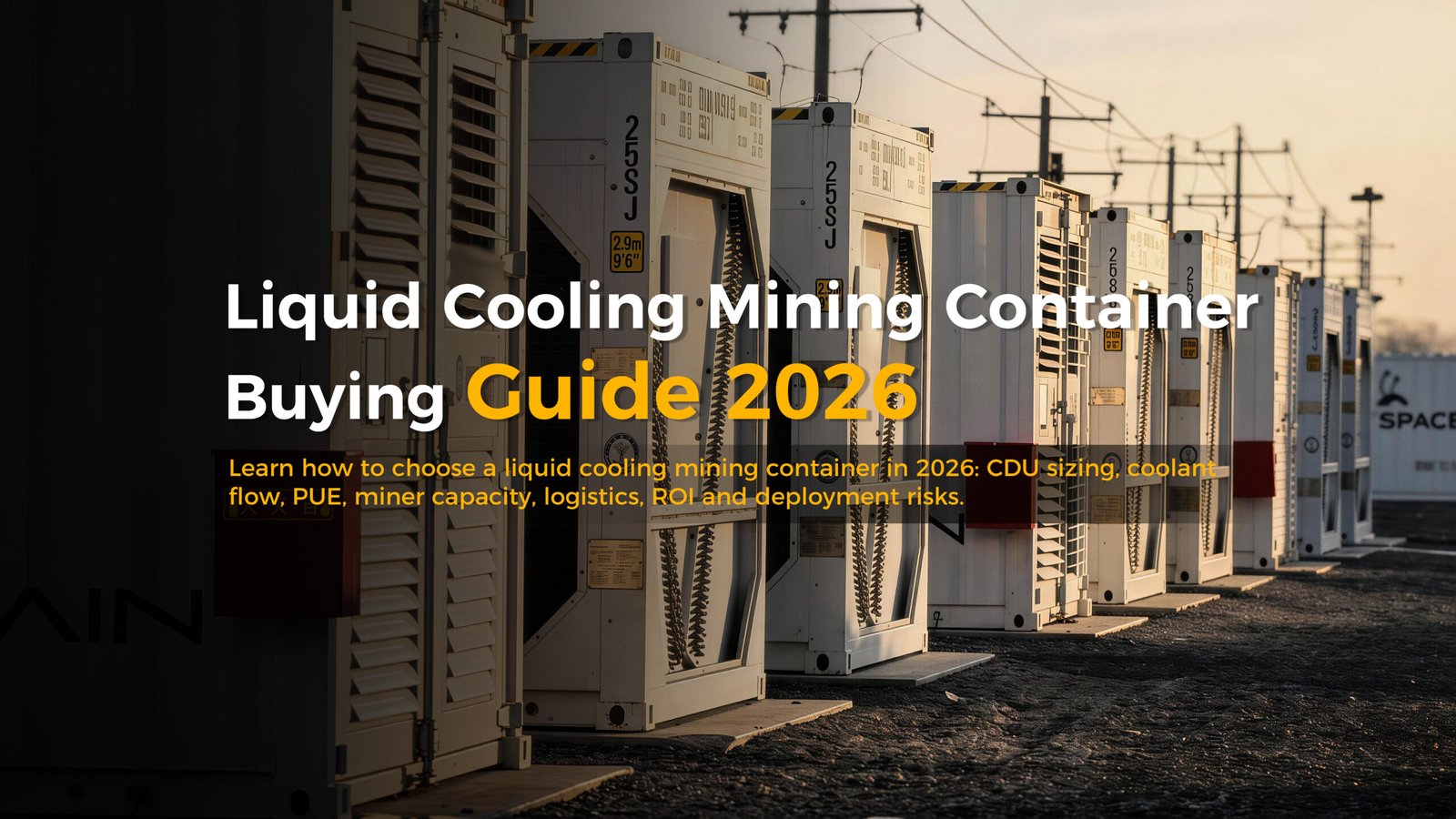

دليل شراء حاويات التعدين المزودة بنظام التبريد السائل لعام 2026: كيفية شراء البنية التحتية، وليس مجرد صندوق فولاذي
الخطأ المكلف ليس شراء جهاز تعدين غير مناسب، بل شراء حاوية لا تستطيع الحفاظ على استقرار عمل ذلك الجهاز لمدة ثلاث سنوات.
في عام 2026، سيحدث... حاوية تعدين مزودة بنظام تبريد سائل لم يعد مجرد صندوق شحن معدل يحتوي على أنابيب بداخله. بل هو نظام مدمج وصغير الحجم يجمع بين الإمداد بالطاقة والتبريد والمراقبة والصيانة.
ومع ذلك، لا يزال العديد من المشغلين يفشلون في إتقان الأساسيات. حجم غير كافٍ CDU مما يؤدي إلى انخفاض أداء أجهزة ASIC الخاصة بك. وتؤدي رداءة جودة المياه إلى تراكم الترسبات الكلسية على الألواح المبردة. كما أن ضعف خطة اللوجستيات يؤدي إلى وصول الحاويات قبل أن يكون الموقع جاهزًا لاستلامها. ويؤدي كل من هذه الإخفاقات إلى فترات توقف مكلفة — وهي العامل الأكبر الذي يرفع التكاليف في أي عملية تعدين.
اشترِ بنية التبريد أولاً. ثم قم ببناء الحاوية حولها.
واقع السوق في عام 2026: كثافة أعلى، وتسامح أقل مع التخمينات
الاتجاه واضح: تتجه مزارع التعدين نحو زيادة كثافة الرفوف، وتشديد التحكم في الطاقة، وإدارة حرارية أكثر قابلية للتنبؤ. ويظهر هذا الضغط نفسه في مراكز البيانات. تشير الوكالة الدولية للطاقة إلى أن استهلاك مراكز البيانات العالمية للكهرباء بلغ حوالي 415 تيراواط ساعة في عام 2024، وقد يصل إلى حوالي 945 تيراواط ساعة بحلول عام 2030 وفقًا لسيناريوها الأساسي. ويمكن أن يمثل التبريد والتحكم البيئي حصة كبيرة من الطلب على الكهرباء في المنشآت، خاصة في المواقع الأقل كفاءة.
بالنسبة إلى المُعدِّنين، فإن المنطق بسيط. فالكهرباء هي نموذج العمل. ولم يعد التبريد مجرد نظام داعم، بل أصبح هو العامل الذي يحدد ما إذا كان معدل التجزئة المركَّب لديك سيُشغَّل فعليًّا بالمخرجات المستهدفة أم لا.
يُعد التبريد السائل خيارًا منطقيًّا عند استخدام دوائر ASIC عالية الطاقة مثل S19 Hydro أو S21 Hydro أو أجهزة التعدين المماثلة التي تعمل بالتبريد المائي، أو عندما يحتاج موقعك إلى تحقيق هدف PUE أقل، أو عندما يتطلب التبريد الهوائي استهلاكًا مفرطًا للطاقة في المراوح، بالإضافة إلى عمليات الترشيح، والتحكم في الضوضاء، وإدارة الغبار.
نصيحة من الخبراء:
إذا كانت سعة الطاقة لديك تتجاوز بالفعل 1 ميجاوات، فلا تبدأ محادثات الشراء بالسؤال: “كم عدد أجهزة التعدين التي يمكن استيعابها؟” بل ابدأ بالسؤال: “كم كيلووات من الحرارة يمكن للنظام التخلص منها بشكل مستمر في درجة الحرارة المحيطة المحلية لدي؟”
الخطوة 1: تحديد حمل المُعدِّن قبل تحديد حجم الحاوية
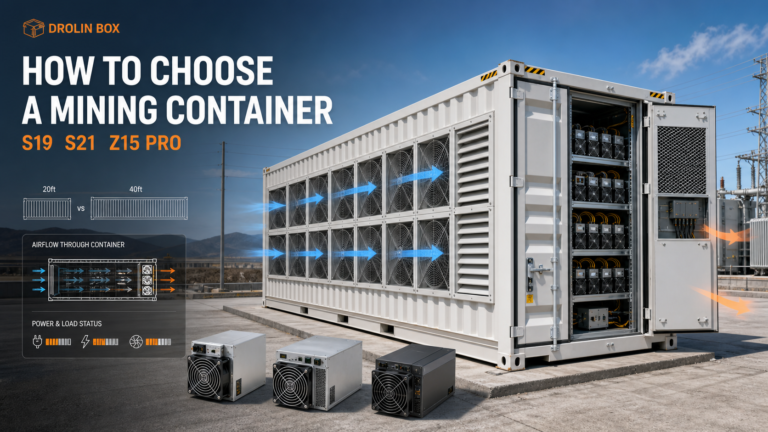
تبدأ معظم أخطاء الشراء بادعاءات تتعلق بالسعة. فقد يزعم أحد الموردين أن حاوية بطول 40 قدمًا يمكنها استيعاب عدد معين من أجهزة التعدين، لكن السؤال الحقيقي هو ما إذا كانت قادرة على توفير التبريد والطاقة والمراقبة والصيانة لهذا العدد في ظل ظروف موقعك.
استخدم هذه الصيغة الأولية:
إجمالي الحمل الكهربائي لنظام تكنولوجيا المعلومات = عدد أجهزة التعدين × الطاقة المقدرة لكل جهاز تعدين
ثم أضف هامشًا هندسيًّا. فلا ينبغي أن يقترن حمل جهاز التعدين البالغ 1.0 ميجاوات بدائرة تبريد تبدو ملائمة على الورق فقط. فالمضخات والمبادلات الحرارية والمبردات الجافة والمرشحات ودرجة الحرارة المحيطة كلها عوامل تؤثر على التشغيل الفعلي.
على سبيل المثال، قد تتطلب حاوية التبريد السائل من طراز 40HC المصممة لاستيعاب حوالي 192 جهاز تعدين بالهيدروجين سعة نقل حراري تتراوح بين 1.2 و1.3 ميجاوات تقريبًا، اعتمادًا على طراز جهاز التعدين ووضع التشغيل ودرجة حرارة الماء المستهدفة عند المخرج. وقد تصل سعة نقل الحرارة في التصميمات الأكبر حجمًا أو المكدسة إلى 2 ميجاوات أو أكثر. ويُعد هيكل الحاوية عاملاً مهمًا، لكن التوازن الحراري أكثر أهمية.
اختر حاوية 40HC عندما تحتاج إلى خدمات لوجستية عالمية ونشر قابل للتكرار. ولا تفكر في استخدام حاوية 45HC أو الأحجام المخصصة الأكبر منها إلا بعد التأكد بالفعل من الموقع ومسار النقل وخطة الرفع.
الخطوة 2: اعتبار وحدة CDU قلب النظام
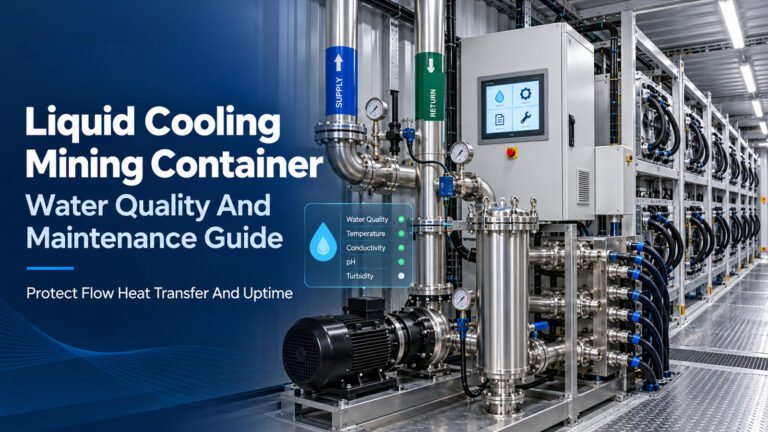
وحدة التحكم في التبريد (CDU) ليست مجرد ملحق. إنها مركز التحكم الهيدروليكي والحراري لحاوية التبريد السائل.
ينبغي أن تجيب المواصفات الجادة لحزب الاتحاد الديمقراطي المسيحي (CDU) على هذه الأسئلة:
- ما هي السعة التصنيفية للتبادل الحراري؟
- ما هي معدلات تدفق الدائرة الرئيسية والدائرة الثانوية؟
- ما هي درجات حرارة المياه الواردة والمرتجعة؟
- هل توجد مضخات احتياطية؟
- هل يمكن استبدال المرشحات دون إيقاف تشغيل النظام؟
- هل يقوم النظام بمراقبة درجة الحموضة (pH) والموصلية والضغط ودرجة الحرارة والإنذارات؟
- هل الأنابيب الداخلية مصنوعة من الفولاذ المقاوم للصدأ؟
- هل يدعم نظام التحكم المراقبة عن بُعد؟
بالنسبة لخيارات وحدات التبريد المركزية (CDU) المثبتة على حامل من طراز DroLinBox، يشمل نطاق المواصفات المؤكدة 200 كيلوواط، و400 كيلوواط، و600 كيلوواط، و800 كيلوواط، و1 ميغاواط. يستخدم التصميم القياسي الماء النقي في الجانب الأولي، والماء النقي/المنقوع/المقطر في الجانب الثانوي مع مادة مانعة للتآكل ومضاد للتجمد حسب الحاجة، وترشيح أولي بدقة 300 ميكرومتر وترشيح ثانوي بدقة 100 ميكرومتر. التفاصيل المهمة لا تقتصر على الأرقام فحسب، بل تتعلق بمنطق الصيانة: التكرار باستخدام مضختين، والمبادل الحراري ذو الألواح المصنوعة من الفولاذ المقاوم للصدأ، واستبدال المرشحات أثناء التشغيل، والمراقبة القائمة على وحدة التحكم المنطقية القابلة للبرمجة (PLC).
نصيحة من الخبراء:
إذا كان العرض يقتصر على عبارة “وحدة CDU بقدرة 1 ميجاوات” دون الإشارة إلى معدل التدفق، ودقة الترشيح، وتكرار المضخات، ودرجات حرارة الإمداد والعودة، فإن ما لديك ليس عرضًا تقنيًّا بعد. بل هو مجرد عرض مبيعات.
الخطوة 3: اختيار طريقة التخلص من الحرارة
لا تزال حاوية التعدين المزودة بنظام تبريد سائل بحاجة إلى التخلص من الحرارة في الهواء الطلق. وعادةً ما يعني ذلك استخدام المبردات الجافة، أو المبردات الجافة ذات القنوات الدقيقة، أو الأبراج الرطبة، أو الأنظمة الهجينة.
يمكن أن تكون الأبراج الرطبة فعالة، لكن استهلاك المياه واللوائح المحلية والصيانة قد تشكل عوائق حقيقية. ولهذا السبب، تزداد جاذبية الأنظمة الجافة وأنظمة القنوات الدقيقة في مواقع التعدين النائية والمناطق الحارة والأسواق التي تولي اهتمامًا كبيرًا لمشكلة المياه. كما تُظهر المناقشات الأخيرة حول مراكز البيانات فائقة الحجم نفس الاتجاه: حيث يتم استخدام التبريد السائل ذي الدورة المغلقة لتقليل الاستهلاك المباشر للمياه، خاصةً في الأماكن التي تتزايد فيها مخاوف الجمهور بشأن استخدام المياه.
بالنسبة لمزرعة التعدين، ينبغي أن يعتمد قرار التخلص من الحرارة الناتجة عن التبريد على الظروف المناخية وتوافر المياه:
- مناخ جاف مع موارد مائية محدودة: يُفضل استخدام مبرد جاف أو مبرد جاف ذي قنوات دقيقة.
- مناخ حار مع تكلفة مياه منخفضة: قم بتقييم نظام التبريد الهجين، مع حساب تكلفة معالجة المياه.
- المناخ البارد: يجب الحماية من التجمد والتكثف، والتأكد من اتباع استراتيجية مقاومة التجمد.
- المواقع التي تكثر فيها الغبار: تحقق من تباعد الزعانف، ونظام الترشيح، وإمكانية الوصول للتنظيف، وصيانة المروحة.
تُعد بيانات برج التبريد الجاف ذي القنوات الدقيقة «DroLinBox» معيارًا مرجعيًّا مفيدًا: نقل حراري بقدرة 1200 كيلوواط عند درجة حرارة محيطة تبلغ 25 درجة مئوية، وأنابيب من الفولاذ المقاوم للصدأ SS304 DN100، ودرجة حرارة مياه المخرج 35 درجة مئوية ± 1 درجة مئوية، و14 مروحة من طراز 950#، ومستوى ضوضاء يبلغ 55 ديسيبل (A) أو أقل عند مسافة 10 أمتار. هذا هو نوع البيانات التي يجب على المشتري طلبها قبل مقارنة الأسعار.
الخطوة 4: التحقق من صحة ادعاءات مؤشر كفاءة استخدام الطاقة (PUE) باستخدام نموذج بسيط
يُعد مؤشر كفاءة استخدام الطاقة (PUE) مفيدًا، لكن يمكن إساءة استخدامه. والصيغة الأساسية هي:
PUE = إجمالي استهلاك الطاقة في المنشأة / استهلاك الطاقة لمعدات تكنولوجيا المعلومات
إذا ادعى البائع أن معامل كفاءة الطاقة (PUE) منخفض للغاية، فاسأل عما يشمله هذا الرقم. هل يشمل المضخات؟ المراوح؟ خسائر المحولات؟ الإضاءة؟ نظام التحكم؟ طاقة المبرد الجاف؟ وهل يتم قياسه سنويًّا أم موسميًّا أم في ظل ظروف اختبار محددة؟
يمكن لحاوية التعدين المزودة بنظام التبريد السائل أن تقلل من تكاليف التبريد، لأن الماء ينقل الحرارة بكفاءة أكبر من الهواء، ولأن النظام يقلل من الاعتماد على مراوح العادم الكبيرة. لكن مؤشر كفاءة استخدام الطاقة (PUE) النهائي يعتمد على تصميم الموقع ككل: درجة الحرارة المحيطة، وتوزيع الطاقة، واختيار المبرد الجاف، وكفاءة المضخة، والتحكم في التدفق، وما إذا كانت أجهزة التعدين تعمل في الوضع المعياري أم في وضع رفع السرعة.
استخدم مؤشر كفاءة استخدام الطاقة (PUE) كأداة للمقارنة، وليس كشعار.
نصيحة من الخبراء:
بالنسبة للنمذجة المالية، احسب الربح مرتين: مرة عند أفضل قيمة لـ PUE وفقًا لتقديرات المورد، ومرة أخرى عند قيمة PUE أكثر تحفظًا. إذا كان المشروع لا ينجح إلا في نموذج «أفضل السيناريوهات»، فهذا يعني أن البنية التحتية هشة للغاية بحيث لا تسمح بتحقيق جدوى اقتصادية حقيقية للتعدين.
الخطوة 5: فحص جودة المياه وإمكانية الوصول لأغراض الصيانة
يُعد التبريد السائل نظامًا موثوقًا به عندما تكون الدائرة نظيفة وخاضعة للرقابة. أما إذا تم إهمال مسألة جودة المياه، فإنه يصبح مكلفًا.
يجب أن تتضمن قائمة مراجعة الشراء ما يلي:
- متطلبات المياه النقية أو المياه المُخففة
- خطة مثبطات التآكل
- متطلبات سائل منع التجمد حسب المناخ
- مراقبة درجة الحموضة (pH) والتوصيلية
- طريقة استبدال الفلتر
- عملية التصريف وإعادة التعبئة
- استراتيجية المضخة الاحتياطية والمستشعر
- منطق الكشف عن التسرب والإغلاق في حالات الطوارئ
وهنا يكمن الفرق بين التصميم الاحترافي للحاويات والتجميع في الورش. فالحاوية الجيدة تُصمم من أجل الفنيين، وليس لمجرد التباهي بها في الصور.
هل يمكن للفني الوصول إلى الفلتر بسهولة؟ هل يمكن صيانة المضخة أثناء التشغيل دون إيقافها؟ هل يكتشف نظام التحكم أي تدفق غير طبيعي قبل أن تقوم أجهزة التعدين بخفض السرعة؟ وهل يمكن للمشغل مراقبة بيانات جودة المياه عن بُعد وفي الوقت الفعلي؟
وإلا، فقد تعمل الحاوية بشكل جيد في الأسبوع الأول، ثم تتسبب لك في مشاكل في الشهر السادس.
الخطوة 6: لا تتجاهل الجوانب اللوجستية
غالبًا ما تُقام مزارع التعدين في الأماكن التي تكون فيها تكلفة الكهرباء منخفضة، وليس في الأماكن التي تسهل فيها العمليات اللوجستية. وهذا يعني أن الطرق والرافعات والتخليص الجمركي وقواعد النقل بالشاحنات المحلية وإمكانية الوصول لعمليات الرفع أمور مهمة.
عادةً ما يوفر الحاوية من طراز 40HC للمشترين التوازن الأمثل بين السعة وسهولة الشحن الدولي. أما الحاويات الأكبر حجمًا، مثل 45HC أو 53 قدمًا، فيمكنها توفير مساحة داخلية أكبر، لكن هذه المساحة لا تكون مربحة إلا إذا أمكن تبريد أجهزة التعدين الإضافية وتزويدها بالطاقة ونقلها دون أن تؤدي تكاليف المناولة الخاصة إلى استنزاف عائد الاستثمار.
بالنسبة للعديد من المشاريع في الخارج، تتمثل الاستراتيجية الأكثر ذكاءً في التكرار المعياري: حاوية قياسية، وطريقة رفع قياسية، وواجهة كهربائية قياسية، وتصميم تبريد قابل للتكرار. يجب توسيع النطاق عن طريق إضافة وحدات، وليس بجعل نقل كل وحدة أكثر صعوبة.
اعتمد نهج التصميم المعياري إذا كان الموقع سيتوسع على مراحل.
الخطوة 7: بناء نموذج العائد على الاستثمار (ROI) استنادًا إلى وقت التشغيل
نادرًا ما تكون الحاوية الأرخص هي الحاوية الأقل تكلفة.
يجب أن يتضمن نموذج عائد الاستثمار (ROI) الخاص بك ما يلي:
- عدد المعدنين ومعدل التجزئة المقنن
- إجمالي الحمل على أنظمة تكنولوجيا المعلومات
- النفقات الرأسمالية المتعلقة بالحاويات
- النفقات الرأسمالية لحزب الاتحاد الديمقراطي المسيحي (CDU) والمبرد الجاف
- الشحن والنقل الداخلي
- الرافعات وتجهيز الموقع
- تكلفة المحولات والمعدات الكهربائية
- مؤشر كفاءة استخدام الطاقة (PUE) المتوقع
- سعر الكهرباء
- عمالة الصيانة
- معالجة المياه وقطع الغيار
- افتراض فترة التعطل
يستحق وقت التعطل سطراً خاصاً به. فالتوقف عن العمل لبضع ساعات في ذروة الأداء الاقتصادي للشبكة قد يكلف أكثر من فرق السعر بين نظام تبريد ضعيف ونظام تبريد احترافي.
نصيحة من الخبراء:
عند مقارنة الموردين، اطلب من كل واحد منهم تقديم سيناريو صيانة في سطر واحد: “إذا تعطلت إحدى المضخات، ماذا سيحدث لعمال المناجم؟” فالإجابة ستخبرك بأكثر مما يقدمه الكتيب الترويجي.
الحكم النهائي للمشترين في عام 2026
اشترِ حاوية تعدين مزودة بنظام تبريد سائل إذا كانت مزرعة ASIC الخاصة بك تحتاج إلى كثافة عالية، ومعدل هاش مستقر، وتكاليف تبريد أقل، وتحكم أفضل في الغبار والضوضاء والمخاطر الحرارية. لا تشتريها لمجرد أنها تبدو أكثر تطوراً من نظام التبريد الهوائي.
يجب أن تثبت الحاوية المناسبة خمسة أمور قبل أن تدفع مبلغ التأمين:
- يمكنه التخلص من الحمل الحراري الناتج عن جهاز التعدين بشكل مستمر.
- يتمتع حزب الاتحاد الديمقراطي المسيحي (CDU) بقدرات كافية، ونظام احتياطي، ونظام مراقبة.
- تتناسب طريقة التبريد في الهواء الطلق مع ظروفك المناخية ومواردك المائية.
- تتناسب الخطة اللوجستية مع ظروف الميناء والطرق والموقع لديكم.
- لا يزال العائد على الاستثمار (ROI) إيجابياً حتى بعد احتساب تكاليف الصيانة ومخاطر التوقف عن العمل.
تم تصميم DroLinBox بناءً على هذا المنطق: حاويات تبريد سائل جاهزة الصنع، وخيارات وحدات التبريد المركزية (CDU) المثبتة على الرفوف بقدرات تتراوح من 200 كيلوواط إلى 1 ميغاواط، ونظام التبريد الجاف بالقنوات الدقيقة، والمراقبة عبر وحدة التحكم المنطقية القابلة للبرمجة (PLC)، ومراقبة درجة الحموضة (pH) والتوصيلية، وأنابيب من الفولاذ المقاوم للصدأ SS304، واستبدال المرشحات عبر الإنترنت، ونشر نظام الحاويات القابل للتخصيص لمزارع التعدين العالمية.
قاعدة الشراء بسيطة.
لا تشترِ الحاوية الأكبر حجمًا. اشترِ الميغاواط الأكثر استقرارًا.