






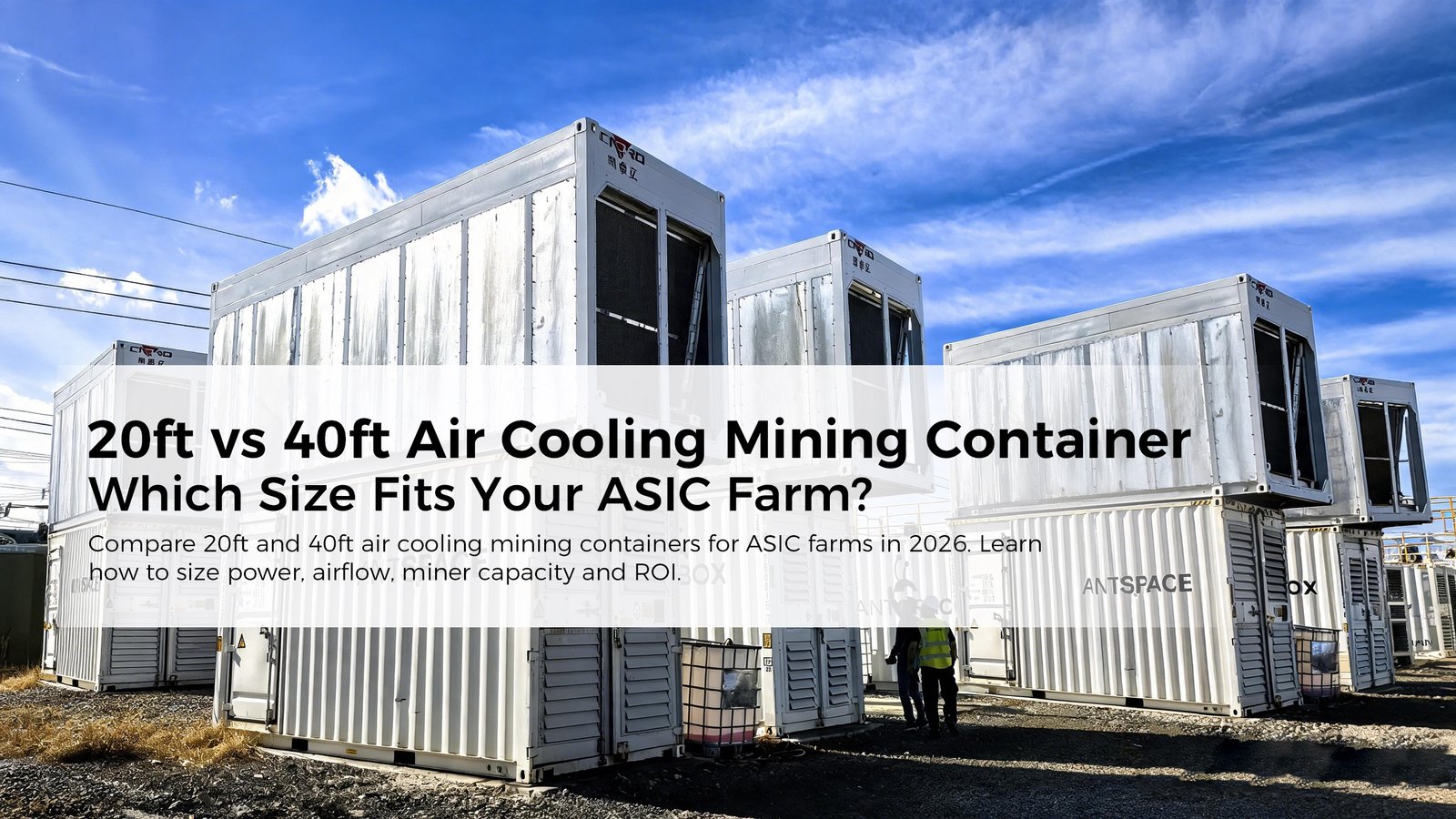

Эта дополнительная длина контейнера — это не просто свободная вместимость. Она влечет за собой необходимость управлять большим воздушным потоком, распределять больше электроэнергии, обслуживать больше майнеров и покрывать расходы на устранение ошибок, если площадка не готова к эксплуатации. Когда покупатели сравнивают 20-футовый контейнер для горнодобывающей промышленности с 40-футовый контейнер для горнодобывающей промышленности, на самом деле вопрос не в том, “какой из них больше?”. На самом деле вопрос заключается в следующем: “Какой из них позволяет преобразовать имеющуюся мощность в стабильный хешрейт с минимальным риском развертывания?”
В 2026 году для ASIC-ферм, особенно небольших и средних проектов, воздушное охлаждение вновь становится актуальным, поскольку многие покупатели отдают приоритет снижению капитальных затрат (CAPEX), быстрому развертыванию и упрощению технического обслуживания. Экономика майнинга биткойнов по-прежнему крайне чувствительна к стоимости электроэнергии и условиям получения дохода; недавние исследования поведения нагрузки при майнинге также показывают, что майнеры реагируют на затраты в электроэнергетическом секторе в зависимости от давления на рентабельность и условий ценообразования на хеш-мощность. Это означает, что размер контейнера следует выбирать с учетом реальных возможностей энергоснабжения, а не амбициозных планов.
Для тестирования выберите значение 20 футов. Для масштабирования — 40 футов.
Настоящее отличие: плотность мощности, а не только площадь помещения
Стандартный 40-футовый контейнер примерно в два раза длиннее 20-футового, но это не означает, что доходность майнинга автоматически увеличивается вдвое. Для ASIC с воздушным охлаждением требуется пространство для притока и вытяжки воздуха, доступа для технического обслуживания, пылефильтров, размещения PDU и безопасной прокладки кабелей.
20-футовый контейнер для горнодобывающей промышленности, как правило, является более подходящим вариантом, если у покупателя ограниченные возможности по энергоснабжению, он планирует пилотное внедрение или ему требуется модуль меньших размеров, который можно быстро доставить, установить и ввести в эксплуатацию. Такой вариант проще понять покупателям, приобретающим оборудование впервые, и проще обслуживать местным техническим специалистам.
Использование 40-футового контейнера для майнинга целесообразно в том случае, если на объекте уже имеется достаточная мощность трансформатора, покупатель стремится разместить больше майнеров на единицу размещения, а эксплуатационная команда способна обеспечить более интенсивный воздушный поток и выдержать более высокую электрическую нагрузку.
Совет от профессионала:
Не выбирайте размер контейнера, пока не убедитесь в доступной мощности. Если на объекте доступно только от 500 кВт до 700 кВт, 40-футовый контейнер может привести к появлению неиспользуемого пространства. Если на объекте доступно 1 МВт и более и требуется уменьшить количество единиц оборудования, 40-футовый контейнер становится более привлекательным вариантом.
Когда использование 20-футового контейнера для горнодобывающей промышленности оправдано
20-футовый контейнер для майнинга с воздушным охлаждением — оптимальный выбор для покупателей, которым важнее гибкость, чем масштабируемость.
Используйте 20 футов в следующих случаях:
- Этот проект представляет собой пилотную ферму
- Доступная мощность ограничена
- Покупатель хочет поэтапного внедрения
- Объект находится в отдалённом месте или к нему затруднительно обеспечить техническое обслуживание
- Заказчик только начинает знакомиться с инфраструктурой майнинга
- Модель майнера пока находится на стадии тестирования
- Первоочередной задачей является развертывание ZEC или ASIC меньшей мощности
- Гибкость в плане транспортировки и размещения имеет большее значение, чем максимальная плотность
Главным преимуществом 20-футового контейнера для майнинга является простота эксплуатации. Меньшее количество майнеров облегчает устранение неисправностей. Более низкая общая тепловая нагрузка позволяет легче исправлять ошибки в организации воздушного потока. Упрощенная система распределения электроэнергии облегчает первоначальное развертывание оборудования для новой команды на объекте.
Это важно для покупателей, которые только начинают разбираться в различиях между мощностью майнеров, мощностью оборудования, особенностями системы вентиляции и ежедневными затратами на электроэнергию.
Когда 40-футовый горнодобывающий контейнер — лучший выбор
40-футовый контейнер для майнинга с воздушным охлаждением — лучший выбор, когда покупатель уже не находится на этапе тестирования идеи. На площадке есть электроснабжение, модель майнера выбрана, и цель состоит в том, чтобы обеспечить максимальный хешрейт на один контейнер.
Используйте 40 футов в следующих случаях:
- В рамках проекта уже обеспечена достаточная мощность
- Покупатель заинтересован в более высокой хешрейте отдельного устройства
- На площадке достаточно места для обеспечения зазора между впускным и выпускным трубопроводами
- Оператор хочет сократить количество контейнеров, которыми ему приходится управлять
- План электропомещения и трансформаторной уже утверждены
- Команда технического обслуживания способна обслуживать зоны с большим расходом воздуха
- Ферма планирует модульное расширение мощности в диапазоне от 3 МВт до 5 МВт
Для небольших майнинговых ферм использование нескольких 40-футовых контейнеров для майнинга позволяет создать четкую схему развертывания: один контейнер, один блок питания, одно направление воздушного потока, один график технического обслуживания. Это упрощает масштабирование по сравнению с использованием слишком большого количества мелких модулей.
Риск заключается в концентрации. Если в одном 40-футовом блоке возникают проблемы с вентиляцией или электроснабжением, это сразу затрагивает больше майнеров. Именно поэтому при заказе 40-футовых блоков необходимо тщательнее продумать планировку.
Воздушный поток: скрытый ущерб от уменьшения размера
40-футовый контейнер для горнодобывающей промышленности — это не просто удлиненный 20-футовый контейнер. Путь прохождения воздушного потока в нём длиннее, тепловая нагрузка выше, а рециркуляция горячего воздуха может случайно возникнуть гораздо легче.
Что касается воздушного охлаждения, основной вопрос, касающийся конструкции, прост:
Может ли достаточное количество чистого входящего воздуха поступать ко всем ASIC, и может ли горячий отработанный воздух выходить, не возвращаясь обратно?
В 20-футовом контейнере легче сбалансировать воздушный поток, поскольку его путь короче. В 40-футовом контейнере конструкция должна исключать появление «мёртвых зон», неравномерного охлаждения и засорения фильтров. Важную роль играют система вентиляции, жалюзи, площадь фильтров, расположение стеллажей и планировка служебного прохода.
Что нужно проверить перед покупкой:
- Разделение впускного и выпускного трубопроводов
- Доступ для замены фильтра
- Направление «горячего» прохода
- Резервирование вентиляторов
- Состояние запыленности в данном районе
- Диапазон температур окружающей среды
- Ограничения по уровню шума
- Ширина служебного прохода
- Рабочий процесс замены майнера
Совет от профессионала:
Если в помещении жарко, много пыли или не хватает персонала, не стремитесь к максимальному количеству майнеров. Контейнер с немного меньшей плотностью размещения, работающий без сбоев, может обеспечить более высокую рентабельность инвестиций, чем перегруженная конфигурация, которая перегревается или требует постоянных остановок.
Распределение электроэнергии: контейнер должен соответствовать трансформатору
Многие покупатели сравнивают 20-футовые и 40-футовые контейнеры по количеству стоек. Такой подход слишком упрощён. Именно система электрораспределения определяет, сможет ли контейнер на самом деле работать.
Прежде чем выбрать размер, убедитесь, что:
- Напряжение в сети
- Мощность трансформатора
- Главный распределительный шкаф
- Номинальная мощность PDU
- Расчет размеров выключателя
- Маршрут прокладки кабеля
- Заземление
- Логика аварийной остановки
- Требования к мониторингу
20-футовый контейнер для майнинга может быть проще интегрировать на площадке с ограниченной мощностью электросети. Для 40-футового контейнера для майнинга требуется более мощная электросеть, поскольку общая нагрузка на ИТ-оборудование выше.
Основная формула выглядит следующим образом:
Мощность одного майнера × количество майнеров = нагрузка на ИТ-систему
Нагрузка на ИТ-оборудование + вентиляторы и вспомогательные системы = нагрузка на объект
Нагрузка объекта × 24 часа = суточное потребление энергии
Расходы на электроэнергию — это не второстепенный вопрос. Это центральный элемент деятельности фермы. Такие инструменты, как браузер данных по электроэнергии Управления по информации в области энергетики США (EIA), демонстрируют, почему операторы внимательно отслеживают цены на электроэнергию по регионам, а Кембриджский индекс потребления электроэнергии для майнинга биткоинов подчеркивает масштаб и стабильность спроса на электроэнергию в сфере майнинга.
Логистика: чем меньше — тем проще, чем больше — тем эффективнее
С точки зрения логистики, как 20-футовые, так и 40-футовые контейнеры являются стандартными форматами, принятыми во всем мире. Это одна из причин, по которой их проще использовать, чем негабаритные или нестандартные контейнеры.
20-футовый контейнер проще перемещать, устанавливать и переставлять. Он может стать лучшим выбором, если площадка узкая, временная, удаленная или еще находится в стадии строительства.
40-футовый контейнер, как правило, обеспечивает большую грузоподъёмность на одну партию груза и более эффективную планировку при подготовке площадки. Для заказчиков, строящих электростанции мощностью в несколько мегаватт, использование 40-футовых контейнеров часто позволяет сократить количество контейнеров, количество крановых операций и количество повторных точек установки.
Речь не идет о том, что “20-футовый контейнер дешевле” или “40-футовый лучше”. Речь идет о том, нужна ли объекту гибкость или эффективность.
Модель расчета рентабельности инвестиций (ROI): Стоимость одного работающего майнера
Наиболее объективным критерием сравнения является не цена контейнера, а затраты на один работающий майнер.
Сравните:
- Капитальные затраты на контейнеры
- Стоимость электрической системы
- Система вентиляции и фильтрации
- Доставка и таможенное оформление
- Размещение крана и строительной площадки
- Работы по установке
- Количество майнеров
- Общая рабочая мощность
- Ожидаемое время безотказной работы
- Периодичность технического обслуживания
- Запасные части
- Риск простоев
В 20-футовом контейнере для майнинга затраты на одного майнера могут оказаться выше, если в нём размещается меньшее количество устройств, однако это позволяет снизить риски, связанные с развертыванием. В 40-футовом контейнере для майнинга затраты на одного майнера можно снизить после полной готовности площадки, однако при этом ошибки могут иметь более серьёзные последствия, если мощность электросети или воздухообмен будут рассчитаны с запасом.
Для покупателей, у которых условия на строительной площадке пока не определены, 20-футовый вариант может обеспечить защиту на первом этапе. Для покупателей, у которых уже подтверждены подключение к электросети и подготовка строительной площадки, 40-футовый вариант позволит повысить экономическую эффективность за счет масштаба.
Окончательное решение о развертывании в 2026 году
Выберите 20-футовый контейнер для добычи, если вы проводите тестирование площадки, начинаете работу с ограниченной мощностью, развертываете оборудование в удаленном месте или обслуживаете заказчика, которому нужен первый шаг с минимальным риском.
Выберите 40-футовый контейнер для майнинга, если мощность вашего источника питания подтверждена, модель майнера выбрана, а ваша цель — масштабировать ферму ASIC с воздушным охлаждением мощностью от 3 до 5 МВт с использованием меньшего количества установок.
Самые опытные покупатели не ориентируются исключительно на размер контейнера. Они принимают решение, учитывая мощность блока питания, конструкцию системы вентиляции, план технического обслуживания и рентабельность инвестиций на каждый работающий майнер.
Для большинства небольших майнинговых ферм в 2026 году оптимальным подходом является поэтапное развертывание: начать с контейнера, размер которого соответствует имеющейся мощности, обеспечить бесперебойную работу, а затем расширяться за счет типовых модулей.
Горнодобывающий контейнер — это не просто пространство. Это решение по вопросам энергоснабжения и вентиляции, воплощённое в стальной конструкции.