
Most analysts are currently distracted by the AI gold rush. However, this creates a massive, overlooked opening in the Bitcoin mining sector—specifically for the strategic expansion of Colombia Bitcoin mining in 2026. As US-based industrial miners pivot their power capacity toward high-tier AI data centers, they are effectively leaving a hashrate vacuum in their wake.
The reality is simple
This migration leaves a surplus of mining hardware looking for a home with cheap, stable power. Consequently, Colombia—specifically its Caribbean coast—has emerged as the premier destination for this secondary wave of global hashrate deployment.
Why the Caribbean Coast is an Energy Goldmine
The regions of Barranquilla and Santa Marta are not just tourist spots; they are the epicenters of President Gustavo Petro’s renewable energy vision. Currently, these areas boast an excess of wind and solar energy that the local grid often cannot fully absorb.
Specifically, for the Wayúu indigenous communities involved in these projects, Bitcoin mining acts as a “digital battery.” Instead of letting excess wind power go to waste, it is converted into liquid capital. Meanwhile, the global market is finally realizing that energy arbitrage is no longer a luxury—it is a survival requirement for the 2026 mining cycle.
The Salt Trap: Overcoming the Coastal Environment
Let’s be clear about the technical hurdles. If you attempt to run standard air-cooled rigs in a humid, salt-heavy environment like Santa Marta, you are inviting a financial disaster. Salt spray is a silent chip-killer that corrodes hashboards in record time. Furthermore, high humidity turns ambient dust into a conductive sludge, leading to frequent short circuits.
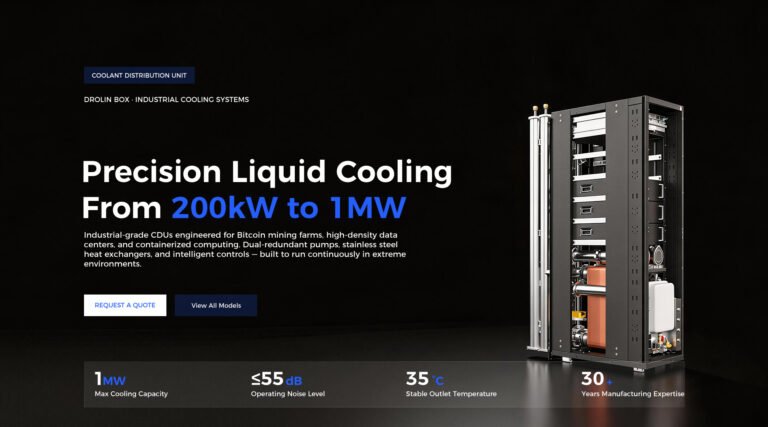
To solve this, the hardware must match the geography. This is where DroLin Box’s liquid cooling containers become a mechanical necessity rather than an option. By employing a sealed, hydro-cooled environment, you effectively shield the silicon from the corrosive Caribbean air. Ultimately, you aren’t fighting the humidity; you are bypassing it entirely.
Achieving Institutional ROI with Modular Infrastructure
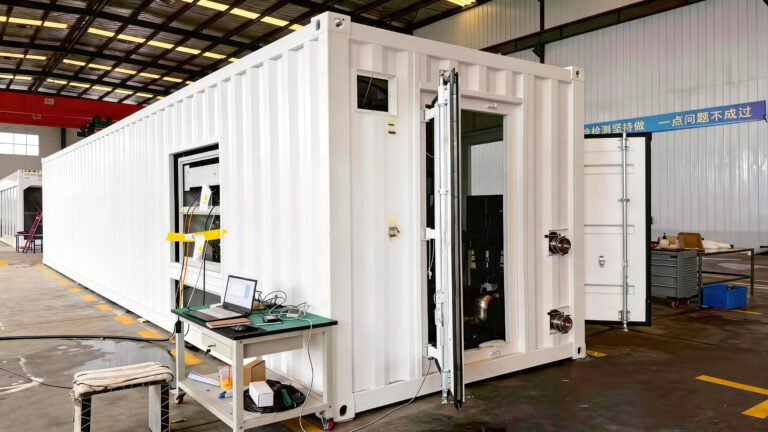
For a decentralized plan to succeed, the infrastructure must be as agile as the capital. We are no longer in the era of multi-year “bricks and mortar” construction projects. Instead, DroLin Box’s 53ft integrated mining containers allow for rapid deployment at remote wind farms.
Key advantages of this modular approach include:
Thermal Efficiency: Achieving a PUE as low as 1.06 in a tropical climate.
Salt Protection: Utilizing sealed loops to prevent salt-air ingress.
Rapid Deployment: Moving from a concrete pad to "hashing live" in weeks, not months.
The Bottom Line: Protecting the Digital Credit
As Michael Saylor recently emphasized at Bitcoin 2026, Bitcoin is the ultimate form of digital credit and energy storage. Therefore, the goal for Colombia isn’t just to mine coins; it’s to monetize stranded energy assets.
If you want to win the margin game in 2026, you don’t just buy the cheapest energy. You buy the most resilient “box” to protect the hardware that captures it. In the high-stakes world of Caribbean mining, the smart money is betting on liquid-cooled, modular resilience.